April 18, 2024
The Net Consequence
BY: Sarah Holcomb
Long nets weighted to the seafloor endanger ocean life off Southern California
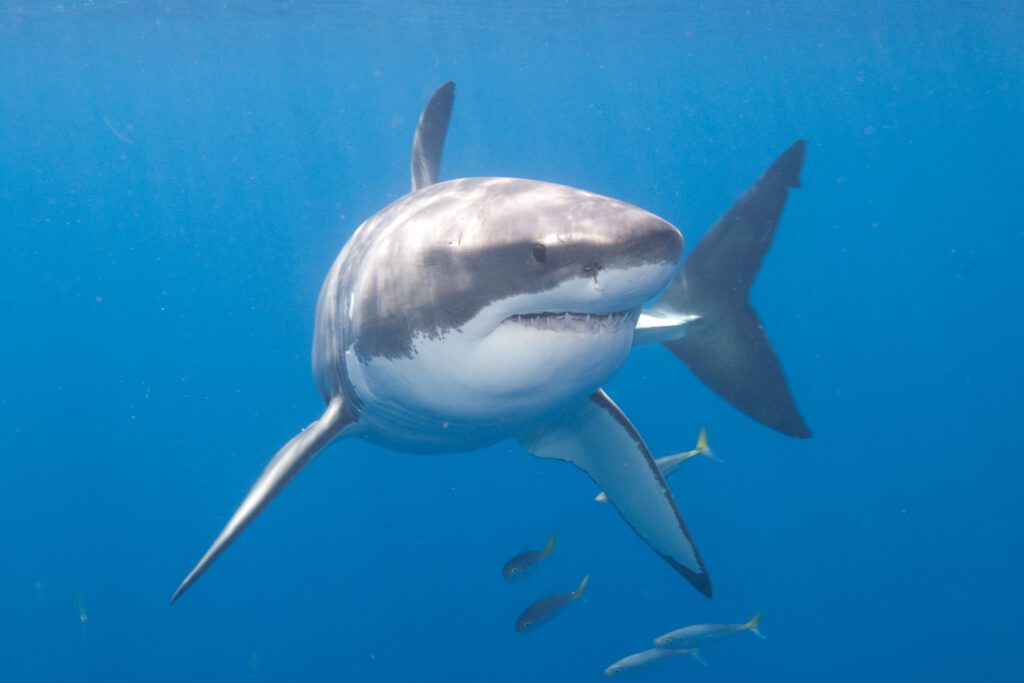
For newborn great white sharks, the warm waters swirling the Southern California Bight provide a perfect nursery. Every year, many great whites — along with dozens of other shark species — birth their pups off the U.S. state of California’s southern coast.
Besides offering a first-class shark nursery, these waters play host to a wide range of ocean life. Home to the Channel Islands — nicknamed the “Galapagos of North America” — here you’ll find almost every topography under the sea, from coral gardens, to underwater canyons, to elaborate kelp forests. Colliding currents from the south and north create “the perfect setting” for a biodiversity hotspot, says Dr. Geoff Shester, Oceana’s California Campaign Director. Young white sharks swim freely, enjoying plenty of food with few predators around.
But these abundant waters also hide one of the greatest threats to juvenile white sharks and the area’s spectacular marine life. Near-invisible fishing nets lie in wait, anchored to the seafloor. And these nets can measure up to 1.8 kilometers (1.1 miles) — the length of 36 Olympic-sized swimming pools.
Nets don’t discriminate
“Set gillnets,” the technical term for these mile-long, stationary nets, do not actually target sharks. The set gillnet fishery aims to catch California halibut and white seabass swimming along the seafloor. But the nets are responsible for more juvenile great white shark deaths in these waters than any other human-related cause. They also catch a wide swath of other ecologically important species.
After fishers weight set gillnets to the seafloor, the nets are permitted to “soak” underwater for an unlimited period of time. The nets are often set in the water for between 24-48 hours — plenty of time for marine animals to get tangled up in a mile of mesh. “Essentially anything within a certain size bracket that swims into [the nets] is going to be caught,” explains Oceana Pacific Marine Scientist Caitlynn Birch. The longer the nets are set, the more animals are likely to die in them.
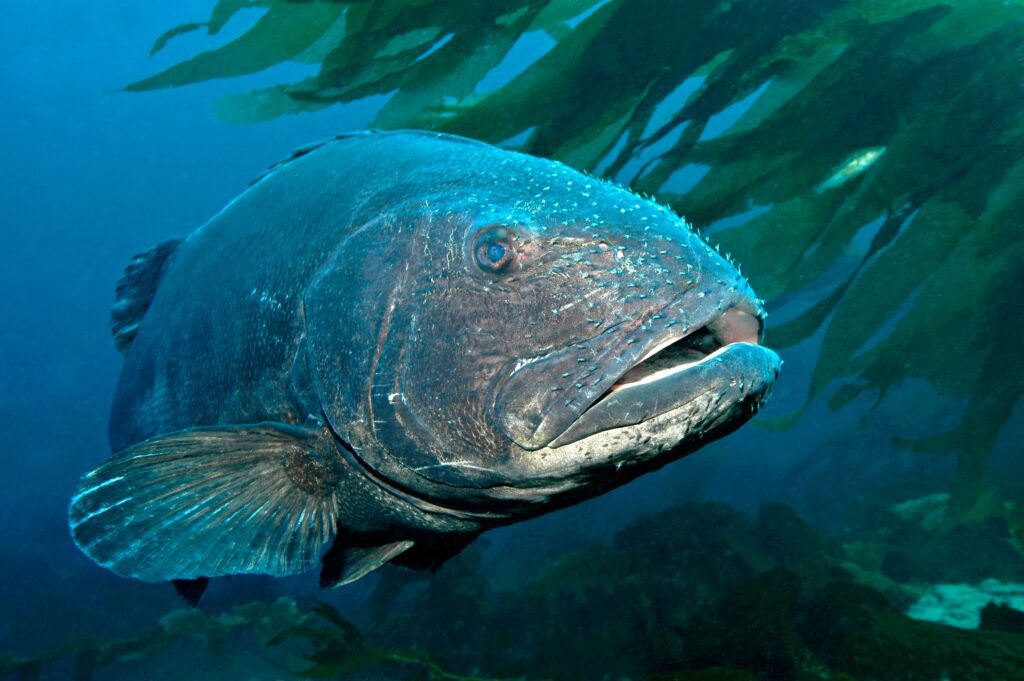
Far from empty, the waters surrounding the Channel Islands are a high-traffic zone for marine life. Thousands of gray whales make their way through on a “migration super-highway,” says Shester. Abundant sea life has made the Islands a favorite destination of humpback whales coming to feed. And at the bottom of the sea reign the kings and queens of the kelp forest: critically endangered giant sea bass, who can grow up to around 250 kilograms (up to 550 pounds). Set gillnets ensnare all of these species and more than 120 others, including sea lions, sharks, rays, and whales.
Many animals caught will already be dead by the time the nets are pulled out of the water. Two in three will end up thrown overboard as waste. “Many species caught are undesirable or illegal to sell,” says Birch, “or when the nets
are brought up, the fish are too damaged from other predators.” The state of California’s risk assessment found that the set gillnet fishery poses a higher ecological risk than any other state-managed fishery.
Some might ask: Why are set gillnets allowed at all?
The only exception
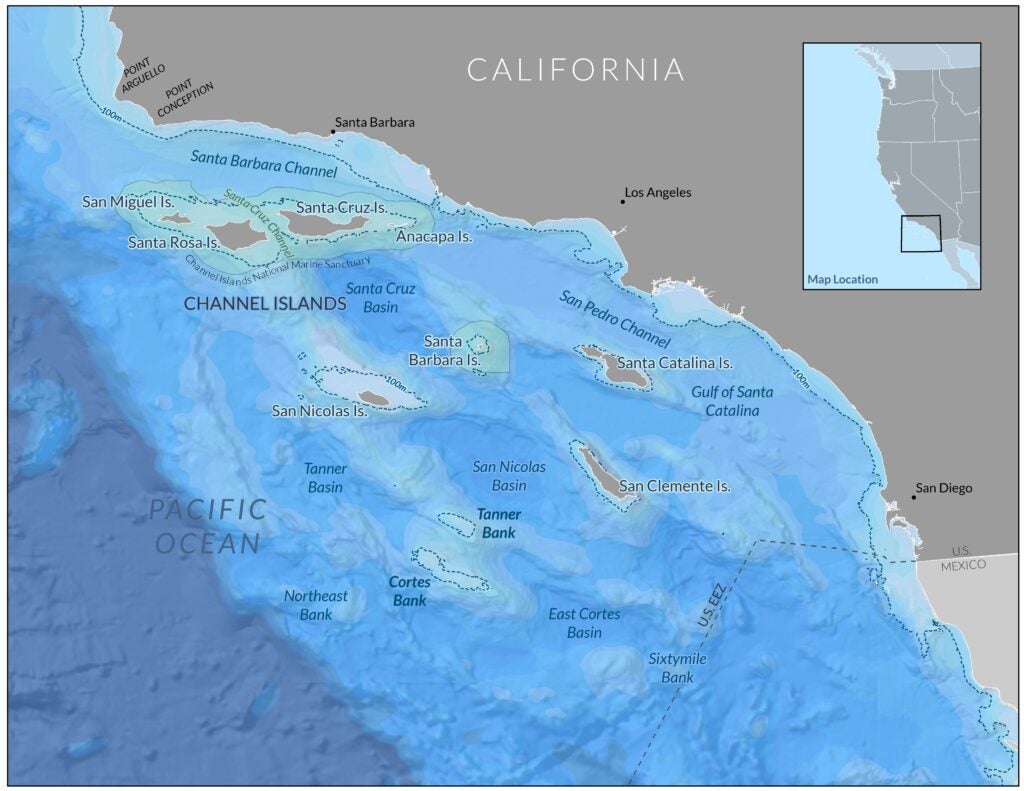
Travel up the southern California coastline and you’ll be looking at areas where set gillnets are illegal to use. In fact, they have been banned for over 100 years in the waters off Northern California. Citizens and lawmakers voted to close off more parts of the California coast to the nets over time, including all waters within three nautical miles of the entire Southern California coast in 1990, plus the Central California coast in 2002.
Since then, scientists have documented the dramatic recovery of harbor porpoise, giant sea bass, and multiple shark species in these areas that were depleted prior to the set gillnet bans.
Southern California’s offshore waters are a different story. Set gillnets continue to be used in Southern California federal waters (between three and 200 nautical miles from shore). They’re also used in state waters beyond one nautical mile from the Channel Islands.
The set gillnet fishery is not only legal in many parts of Southern California’s waters; it’s also the only fishery allowed to catch several strictly prohibited species. “This fishery has the odd exemption that allows them to take white sharks,” says Shester, “and sell them dead or alive to a museum, aquarium, researchers, or even as taco meat.”
A similar exemption applies to the rare giant sea bass. “Giant sea bass were nearly wiped out entirely due to fishing pressure in the early 1900s, and have been prohibited for decades in all other fisheries,” says Shester. “Yet set gillnets still catch them and those fishers are allowed to keep them.”
Today, Oceana and its allies are campaigning for stronger regulations to reduce the unnecessary waste from set gillnets, while supporting more selective fishing methods, like hook-and-line fishing. From 2007-2022, halibut caught with hook and line sold for approximately 30% more per pound compared to halibut caught with set gillnets.
About 25 set gillnet fishers remain active today. While bycatch estimates reveal the set gillnet fisheries’ outsized impact on marine life, inconsistent tracking by state and federal managers means that the true scale of catch and the discarded bycatch remains a mystery.
For campaigners, the key to winning new regulations lies in this missing data.
Keeping track
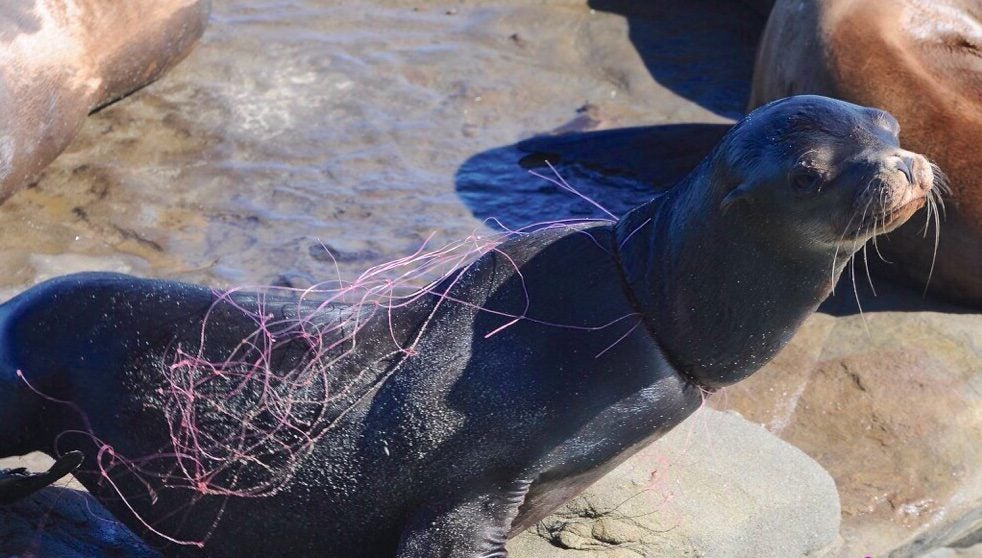
If an entangled sea lion or whale can surface with parts of a net around its body off Southern California, the set gillnet fishery isn’t found at fault. Fishers aren’t required to mark their nets. Without this “fingerprint,” it’s difficult to prove where the net came from, even if other factors point to the fishery, says Shester.
In the absence of robust data, the status quo remains in place. “We see the lack of data as a big, big problem, especially given the fishery’s track record,” Birch emphasizes.
After years of inaction, change may soon be in store for the set gillnet fishery. The California Department of Fish and Wildlife is preparing to roll out a regulatory package in 2024. “Right now we’re focused on campaigning for regulations that could be put in place in the near-term to reduce the impact of the fishery,” explains Shester.
One such regulation would require fishers to mark their gear, allowing scientists to pinpoint the true extent of the entanglement problem.
Next, Oceana is advocating for reduced maximum soak times, which would require fishers to pull in their nets more frequently — and improve the likelihood that unwanted animals will survive.
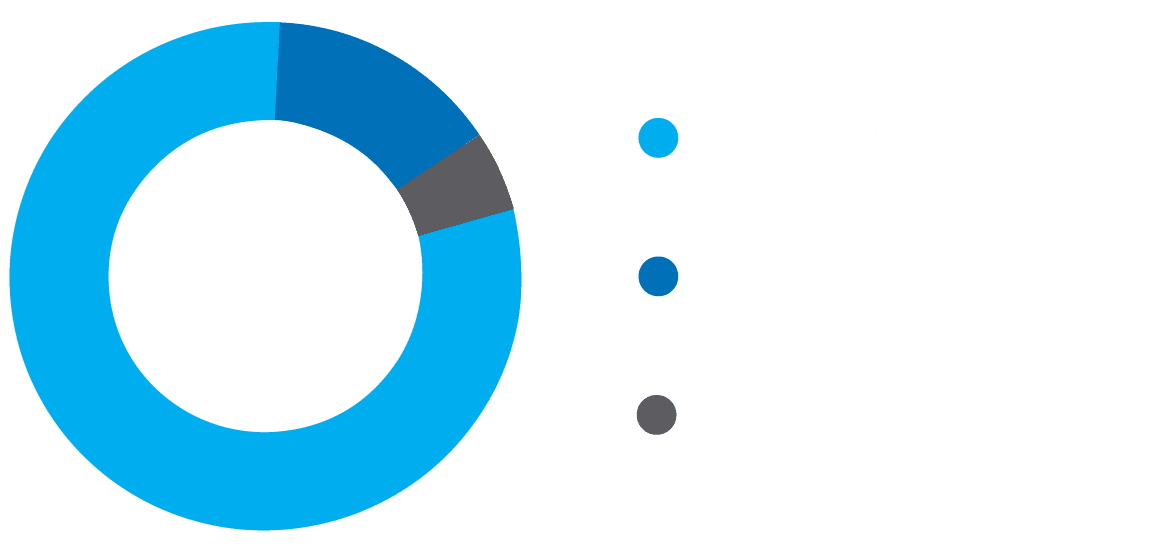
Oceana is also advocating for observers — third-party scientists — to be present on the fishing vessels and keep track of the animals that are caught, helping to fill in missing data. Under federal law, all fishers are required to report their interactions with marine mammals. Using data obtained through the Freedom of Information Act, however, Oceana found that just 6% of the total estimated interactions are self-reported. Independent observers are necessary, Oceana’s team concluded.
Currently, California does not have the authority to require observers for any of the state’s fisheries.
“Having a third-party data source is really important for accurate and sustainable fisheries management,” Birch explains. “If we can help establish a state fishery observer program, this could be one of the biggest wins for California fisheries.”
Biodiversity and beyond
The giant kelp forests surrounding the Channel Islands support more than 1,000 species beneath their canopies. The campaign to regulate set gillnets is “not just a fishery issue,” Shester says. “It’s about protecting havens for biodiversity.We need to protect them during this time of unprecedented climate change and ocean acidification.” Because set gillnets are “indiscriminate,” the fishery impacts vulnerable species whose population status we don’t yet know, says Shester. “This is exactly how biodiversity is lost.”
As Oceana campaigns to regulate this harmful fishing gear, the goal isn’t to shut down fishing, Shester says. “The Oceana approach is to keep fishers on the water, but using the benefit of science and technology to fish in a way that’s smarter and allows ecosystems to thrive.”
In April 2024, Oceana will launch an expedition to the Channel Islands, documenting its biodiversity as the campaign continues to bring visibility to this important ecosystem and the threats it faces.