andy sharpless

Oceana at The Economist World Oceans Summit

We’re excited to announce that The Economist World Oceans Summit will take place in late February – and our CEO Andy Sharpless will be there representing Oceana.

The Summit will take place in Singapore from February 22nd-24th, and Sharpless will be joined by more than 200 global leaders in business, government, academia and NGOs, including famed oceanographer Sylvia Earle, NOAA administrator Jane Lubchenco, National Geographic explorer-in-residence Enric Sala, and many others.

We’re glad to see the The Economist devoting this summit to the oceans, and with such an extraordinary group of panelists and attendees, we hope the event will produce a constructive dialogue on solutions to the oceans’ biggest threats. You can learn more about the summit program and register your place at the summit at www.economist.com/worldoceanssummit.

You can also join in the ocean discussion on the Economist website prompted by Sharpless’ question: Is it inevitable that global fisheries will be depleted? Go ahead, weigh in!

It’s Time to End Handouts to Big Oil

andy sharpless

Oceana CEO Andy Sharpless speaks to a crowd at the Capitol. © Oceana/Heather Ryan

Yesterday Oceana CEO Andy Sharpless joined members of Congress and other clean energy advocates in urging an end to oil industry tax breaks and subsidies

The five biggest oil companies – including Chevron, Shell and ExxonMobil -- took in 70 percent more profit this quarter than they did in the same quarter in 2010, and their earnings for 2011 are projected to go up by 74 percent to $132 billion. And yet U.S. policymakers have consistently voted to continue tax breaks and subsidies for these corporations.

In other words, we are essentially paying these companies to take big risks in our oceans. What’s wrong with this picture?

As Sharpless noted, ending these tax breaks will protect vital economic programs for hard working Americans and veterans, while reducing the federal deficit.  “Ending giveaways to oil companies is a no-brainer,” Sharpless said. “Oil companies should pay their fair share of taxes like the rest of us – they doggone sure have the money.”


Senator Robert Menendez (D-NJ), one of the speakers at yesterday’s press conference, has been a longtime leader in the fight to close tax loopholes for Big Oil. Just last month, Sen. Menendez led a letter with 13 Senate colleagues to the The Joint Select Committee on Deficit Reduction, often called "the Supercommittee," urging consideration of his “Close Big Oil Tax Loopholes Act.”  The bill calls for the elimination of more than $21 billion in oil subsidies. The bill received a majority vote in the Senate but did not pass due to a Republican filibuster. 

“Isn’t it time we asked Big Oil – the folks who made $100 billion in profits so far this year – to pay their fair share?” Menendez said. 

We couldn’t agree more.

The Obama Administration has proposed cutting harmful oil and gas subsidies by $4 billion per year.  The President’s proposal would net over $40 billion over 10 years.

We’ll continue the fight to end these harmful subsidies and promote investment in clean energy. Thanks as always for your support and stay tuned! (In the meantime, you can check out more photos from yesterday's presser.)

Video: Andy Sharpless at TEDxOilSpill

At last year’s TEDxOilSpill conference in Washington, D.C., Oceana CEO Andy Sharpless tackled the 10 biggest myths he hears about offshore drilling. His presentation is especially poignant this week considering the government's decision on Friday to re-open the Western Gulf of Mexico for new oil and gas exploration for the first time since the spill.

Check it out and pass it on!

The Real Reason for High Gas Prices

Andy Sharpless is the CEO of Oceana; this post also appeared on Politico.

Why do we take terrible risks to drill for oil in the Gulf of Mexico and elsewhere along our coasts?

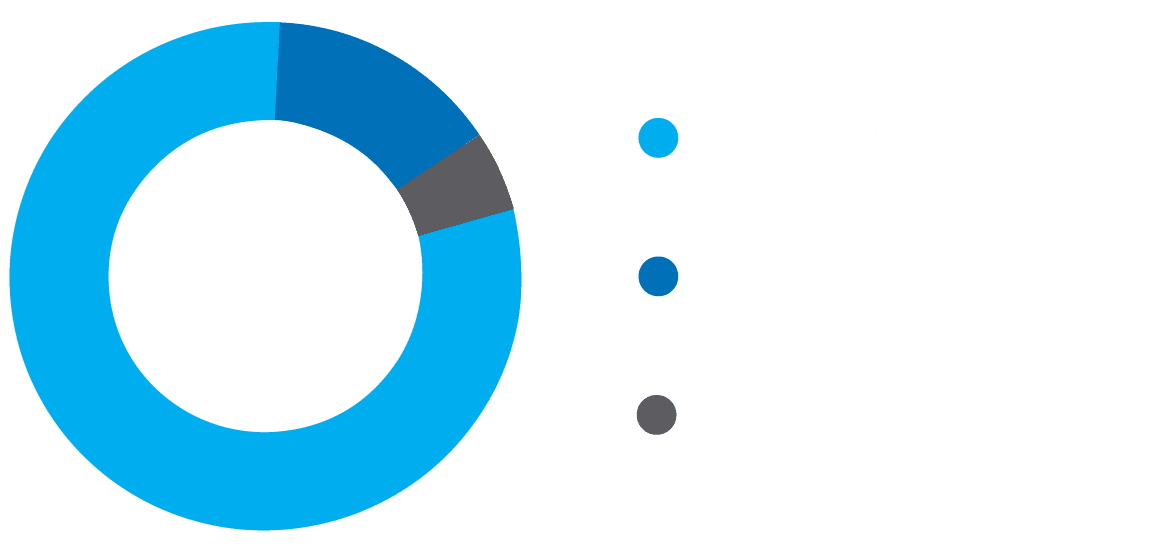
Most people would say we drill to protect ourselves from big fluctuations in the price of a gallon of gas that are caused by the major upheavals in the Middle East. Look at this chart (data from the Energy Information Administration):

Their argument is that the more oil we can produce domestically, the lower the price we’ll pay at the pump. It’s not that they like the sight of oil wells off our beaches. The main reason they are doing so is they think it will save them money – especially as gas prices approached $4 a gallon recently.

This idea is not only intuitively appealing, it is repeatedly, and unambiguously, promoted by important government officials from both parties. Sen. Mary Landrieu (D-La) defended new legislation that would expand offshore oil drilling, saying “this bill would do more to lower gas prices at the pump than any other plan.” Sarah Palin criticized President Barack Obama, “His war on domestic oil and gas exploration and production has caused us pain at the pump.”

Oceana CEO Andy Sharpless in 'Sea Voices'

Oceana CEO Andy Sharpless is counted among the notable ocean conservationists  -- including Carl Safina, Sylvia Earle and Robert F. Kennedy, Jr. -- in SEA VOICES, a coffee table book by Duffy Healey and Elizabeth Laul Healey. The couple has been involved in saving the oceans for decades, and they recently posted an excerpt of the book’s interview with Andy on their website.

Here’s an excerpt from the Q&A about krill, a topic near and dear to Andy’s heart.

Q. Krill is very important to the overall food chain of the ocean.  Can you briefly explain what krill is, why it’s so important, and what Oceana and others are doing to help protect krill?

A. Krill are small, shrimp-like crustaceans. There are 85 species of krill, and they are present in all of the world’s oceans, and are particularly abundant in the Southern Ocean.  Krill have light emitting organs called ‘photophores’ that make them glow in the dark; swarms of krill at night or in the dark ocean depths make impressive swirling light displays.  The largest krill, the Antarctic krill, is thought to live up to 11 years old.  Ocean wildlife eats between 150 and 300 million metric tons of krill each year.

What the Oil Spill Commission Missed

Andy Sharpless is the CEO of Oceana.

Last week, the federal government released a report from the National Commission on the BP Deepwater Horizon Oil Spill and Offshore Drilling. In some ways, the Commission got it exactly right. After extensive study, the Commission concluded that:

‱    The Gulf of Mexico oil disaster was not an isolated incident, and
‱    It was the result of systemic failure in the oil industry and its government regulators.

But where the Commission failed was in its recommendations for the future of the oil industry in America. While acknowledging that offshore drilling can never be safe, the Commission declined to recommend removing the cap on liability for drilling disasters like the Deepwater Horizon. Explaining this decision on national television, Chairman Reilly said that some Commission members worried that removing liability limits for disasters would cause the international oil companies to transfer operations to countries that limited their risks from failures like the one this summer in the Gulf.

Oceana Responds to the Gulf Oil Spill Panel's Report

Almost nine months after the oil gusher began in the Gulf of Mexico, this morning the presidential commission investigating the Deepwater Horizon disaster released its final report.

The commission concludes that the oil industry was plagued by systemic problems that could lead to another accident unless major reforms are enacted by the government and the drilling companies. The panel placed blame on all three companies responsible for the well – BP, Transocean and Halliburton – and the government regulators responsible for overseeing them.

The panel also outlined its recommendations for regulations and practices to prevent another spill, including an increase in the budget and manpower at the Bureau of Ocean Energy Management, Regulation and Enforcement, lifting the current $75 million cap on corporate liability for damages from an oil spill, and significantly strengthening the oil-spill-response capabilities in the Arctic before any new major drilling is allowed there.

 Oceana CEO Andrew Sharpless had this to say about the report, (you can read his full statement here):

“The Commission
correctly concluded that the Deepwater Horizon disaster was not an isolated incident; but was indicative of a systemic failure of the oil industry and the federal regulatory agencies responsible for overseeing it.

Ten Myths about the Oil Spill and Offshore Drilling

Photo by Kris Krug via Flickr

At yesterday’s TedxOilSpill, I spoke to the crowd about the questions I hear most from people who don’t see eye to eye with me on why the disaster in the Gulf is our call to action.

Here are my responses to the naysayers -- feel free to use these with any clean energy skeptic you come across.

1) Isn't the Deepwater drilling disaster just like an airplane crash? We don't shut down aviation when a plane crashes.

No. In an airplane crash, most of the victims are those who were on the airplane. In this case, most of the victims are the millions of people living in the Gulf. This is more like the guy who built a campfire in the dry season, against regulations, and burned down the national forest and all the towns and cities alongside it. That's why we have regulations against building campfires during the dry season: Not because every camper burns down his campsite, but because all we need is one. We have laws against dry season campfires, and we should have laws against ocean oil drilling.

2) There are 3600 drilling platforms in the gulf. Are you going to shut them all down?

We're not calling for a shutdown of the platforms, just of drilling. Once the wells are drilled, the risks go down. The pumping can continue, but the drilling has to stop.

3) So then isn't this just a deep-water problem? Can't we continue in the shallow water?

Ocean drilling in shallow water is also very risky. One of the top three oil drilling disasters of all time, Ixtoc 1, was in 160 feet of water. And last August, the Montara rig blow-out near Australia, which took 11 weeks to control, was in just 250 feet of water.

Tears and Laughter at TEDxOilSpill

Oceana Pollution Campaign Director Jackie Savitz. (Photo by Kris Krug)

After watching and reading news reports and blog posts about the Gulf oil spill for more than two months, I was wondering if anything new could be said about the catastrophe.

As I found out at yesterday’s TEDxOilSpill conference, the answer is a resounding yes. Scientists, entrepreneurs, anthropologists, activists, musicians and writers came together to vent, and to try and wrap their heads around how this could have happened, and to bat around solutions, immediate and long-term.

Over and over, I heard riffs on a theme: this is an unprecedented disaster, and we are still in the thick of it. We don’t know how bad it will get, or what the long-term effects will be. And now is our moment to make sure it doesn't happen again.

Oceana CEO Andy Sharpless fired off a list of ten myths about the oil spill and offshore drilling, and Oceana campaign director Jackie Savitz told the crowd that “it is time to tell the pusher (Big Oil) that we’re going clean.”

It was an intellectually and emotionally exhausting day – several presenters were brought to tears during their presentations.

The Spring Oceana Magazine is Here!

The new issue of the Oceana Magazine has arrived!

This issue features news from the Gulf, including an in-depth look at the dangers of offshore drilling. The magazine also explores offshore wind as a source of clean, safe, sustainable energy. 

Also included: updated news on the status of loggerhead sea turtles, and the latest happenings in our newest office in Belize, plus a profile of "Top Chef" finalist Bryan Voltaggio. Chef Voltaggio even gave us the recipe for one of his favorite sustainable fish dinners so you can make it at home!

Check out the magazine for more Oceana goodies.