chile

Ocean Victories of 2011: Thank You!

© Oceana/Eduardo Sorensen

Andy Sharpless is the CEO of Oceana.

As we enter the last weeks of 2011, I’d like to thank you again for your support this year. Even as we continue to face global economic insecurity, your support has made it possible for Oceana to win important victories for the oceans.

Here are just a few of the victories you helped us achieve in 2011:

This is a special year for Oceana, because it’s also our 10th anniversary year. In 2001, our founders decided that the world needed a conservation organization that could win real policy changes for the oceans on an international scale.

Since then, Oceana has expanded to six countries, garnered more than half a million supporters and protected 1.2 million square miles of ocean, including innumerable sea turtles, sharks, dolphins and the people who depend upon and enjoy the oceans. Our founders are pleased with the results, and we hope you are as well.

We continue to have ambitious goals, not just for 2012, but the next decade. I hope you’ll continue to join us for the ride. Thank you again.

Video: Underwater Teaser from Chile

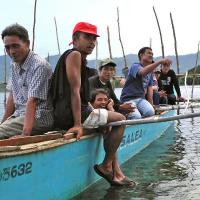
Earlier this year, Oceana and National Geographic completed an expedition to Sala y GĂłmez Island, an uninhabited Chilean island near Easter Island in the Pacific Ocean.

It was a follow-up to our first journey in October 2010, which was instrumental in the creation of a no-take marine reserve of 150,000 square kilometers around the island. Sala y GĂłmez is part of a chain of seamounts that are vulnerable to fishing activity.

And after months of patiently waiting, we now get to see some of the biodiversity that our colleagues discovered on their expeditions. NatGeo is releasing a documentary about Sala y Gómez, featuring Oceana campaigners as well as Dr. Enric Sala, marine ecologist and National Geographic Explorer-in-Residence, who has called Sala y Gómez “one of the last undisturbed and relatively pristine places left in the ocean.

Check out the trailer:

The dive team glimpses 15 Galapagos sharks and scads of slipper lobsters – and that’s just in this three-minute clip! You can catch the full documentary on January 19th at 8 pm on NatGeo WILD.

New Videos and More in Oceana’s Fall Digital Mag

adrian grenier

Hey ocean lovers, the fall issue of our digital magazine is now available! There's lots of fun stuff inside as usual; here are some of the gems this time around:

*A gorgeous video from our expedition in the Baltic Sea this summer

*A slideshow of photos from this year’s Hamptons Splash party – and a catchy tune by the Honey Brothers with Oceana ambassador Adrian Grenier

*Victory! Chile ends shark finning (warning: includes some gruesome footage)

*Stunning underwater video from this year’s expedition in the Mediterranean

*The 2011 Ocean Heroes – shark loving youngster Sophi Bromenshenkel and marine mammal rescuer Peter Wallerstein

Check out the full issue to see the videos, photos and stories, and spread the word!

Bottom Trawling Battle in Chile Continues

juan fernandez islands corals

Corals in the Juan Fernandez Islands. © Oceana/Eduardo Sorensen

Oceana in Chile has been working for several years to keep bottom trawlers out of the most vulnerable marine ecosystems in the nation’s waters.  

Back in 2009, we proposed a bill that would close all 118 seamounts in Chile to bottom trawlers, and this week our staff participated in a discussion of the bill by the Chilean Senate’s Fisheries Committee.

Bottom trawling, one of the most destructive forms of fishing, uses a huge, heavy net to scrape the seafloor. Trawlers are indiscriminate, which results in overfishing and the accidental entanglement of animals including sea turtles and marine mammals. And these heavy nets destroy everything in their paths, including coral reefs.

Chile’s seamounts are home to jewel-toned coral reefs and fish, mammals such as fur seals and sea lions, and many more beautiful and unusual creatures. Some of these seamounts are home to species that can be found no where else in the world. Every pass of a bottom trawler turns swaths of these seamounts into barren wastelands.

Oceana’s 2009 proposal would ban bottom trawling on all 118 seamounts until this fishing technique is scientifically proven not to damage the ecosystems in question. Estimates suggest that this ban would have affected only 0.09% of Chile’s seafood exports in 2009.

Alex Muñoz, Oceana’s Vice President for South America, said about the bill, “Protecting vulnerable marine ecosystems that are threatened by trawling not only is important from an ecological point of view but also enhances the productivity of the fisheries that depend on these habitats.”

South America has been making important strides to protect their vulnerable ecosystems. Last year, Chile created a 150,000 square kilometer no-take marine reserve around Sala y GĂłmez Island and Belize banned bottom trawling throughout its waters.

Patagonia’s Penguins at Risk from Proposed Coal Mine

magellanic penguin

Magellanic penguins in Chile. Image via Wikimedia Commons.

Last month Chile’s government approved a controversial coal mine project in southern Patagonia’s Riesco Island, despite opposition from local residents and environmental groups, including Oceana.

Oceana presented a report to Chile’s environmental ministry outlining the threats facing mammals and birds in the region, including the area’s most emblematic seabird, the Magellanic penguin. The threats from the mine include heavy metal pollution (such as mercury), oil spills, and boat collisions with marine mammals.

Riesco Island is part of Chile’s Alacalufes National Reserve, which is home to an important colony of Magellanic penguins – around 10,000 of the seabirds live around the island. The island and its surroundings are also home to at least 27 species of bird and 7 marine mammal species, including humpback whales. One of the region’s waterways, Otway sound, is one of the only places on the Chilean coast where the Chilean dolphin, bottlenose dolphin and southern dolphin can all be found.

The heavy metals released by coal mining would affect seabirds’ reproduction, especially the penguins. Oil spills can contaminate the eggs, cause death by inhalation and ingestion, and loss of feather waterproofing, which can lead to hypothermia.

Plus, Chile does not have a contingency plan to treat animals affected by oil spills. According to our report, of 76 penguins treated for oil contamination in 2006 in Patagonia’s Madalena Island, 22 died. And in 2004, an oil spill in Chile’s Tierra del Fuego led to the loss of 88% of the adults in a colony of rock cormorants.

Video: Chile’s Underwater Trove

Earlier this year, Oceana Chile sailed to far-flung Alexander Selkirk Island, named for the Scottish sailor who spent four years as a castaway on the island, probably inspiring the story of Robinson Crusoe.

The island is one of three that comprise the Juan Fernández Archipelago, which sits more than 400 miles off the coast of Chile.

Check out the stunning footage they came back with:


As you can see, the expedition team found a surprising abundance and diversity of species around the island, including lobsters and many kinds of fish. While the archipelago has been compared to the Galápagos Islands for its rich biodiversity, it lacks conservation measures against destructive fishing. As a result, Oceana has been working for several years with the fishing communities of Juan Fernández to protect their exceptional marine resources.

CEO Note: Victory! Chile Bans Shark Finning

Great news! Chile’s Congress has voted unanimously to ban shark finning -- and I’m proud to announce that it’s a direct result of our work.

The bill, which Oceana drafted and campaigned for, will end the brutal practice of shark finning, in which a shark’s fins are sliced off and the shark is thrown back into the water to suffocate or bleed to death. The new bill requires sharks to be landed with their fins still naturally attached.

This victory follows on the heels of a very similar ban passed by the United States Congress last December. Chile’s adoption of the same approach is heartening at a time when sharks are in serious trouble around the world.

Up to 78 million sharks are killed each year for their fins, and Chile has become a major shark fin exporter. A Freedom of Information Act request filed by Oceana revealed that between 2006 and 2009, Chile exported more than 71 tons of shark fins from 8 different species.

With the passage of this bill, Chile joins a growing list of countries leading the way in shark conservation. This legislation will help protect shark populations and ocean health in Chile and beyond.

Congratulations to our Chilean colleagues, and thanks to supporters like you, whose support makes it possible for us to win significant victories like this one.

Oceana’s Spring Digital Mag

Hey ocean lovers, the spring issue of our digital magazine is now available! We’re pretty excited about it; here are some of the features this time around:

*A stunning photo slideshow of Chile’s Salas y Gomez Island, where we recently helped create the world’s fourth-largest no-take marine reserve.

*Comedians Rachael Harris and Angela Kinsey join Oceana to save sea turtles.

*Victory! Belize ends trawling once and for all.

*Video of Jeff Bridges’ performance at the 2010 SeaChange Summer Party.

*Trailer for Ted Danson’s new book, “Oceana”.

Check out the full issue to see the videos, photos and stories, and spread the word!

Good News for Sharks and the Oceans

I have several good news items to share with you this week.

First, I am happy to announce that our trawling ban in Belize is now official. Belize is home to a major portion of the world’s second largest reef system as a well as a thriving local fishing community, and the ban protects both these essential elements of Belizean life.

Belize is one of only a few countries in the world to completely ban trawling. We won this important victory with the help of the local community, our staff in Belize and Sir Thomas Moore, a longtime supporter of Oceana’s work around the world.

Second, we have made great strides in our campaign to save sharks. As top predators, sharks are essential to a healthy ocean, and a hundred million sharks are killed every year by the industrial fishing industry – mostly for their fins.

Late last year, we won an incredible victory to protect sharks with the passage of the Shark Conservation Act, which banned shark finning in the United States. Now, we are on the verge of gaining two more important victories to protect sharks.

Chilean Supreme Court Rules in Favor of Oceana

The good news just keep coming in Chile. Yesterday the Chilean Supreme Court ruled against a lawsuit filed by the laboratory VeterquĂ­mica to prevent the Livestock and Agriculture Bureau (SAG) from disclosing information to Oceana.

The case began in 2009, when Oceana submitted a Freedom of Information Act request to SAG to access documents that the Bureau used to approve the use of quinolone-related antibiotics in Chile’s salmon farming industry. The SAG denied the information due to the opposition of the laboratories Veterquímica, Recalcine and Centrovet, the main suppliers of these chemicals in Chile. Now the SAG has until April 5th to disclose the documents that supported its decision to approve such antibiotics.