fishing

Cod Numbers Disappoint Fishermen and Scientists

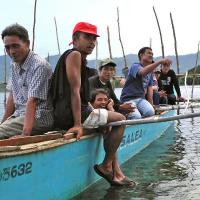
A fishing boat in the Gulf of Maine. © Gretchen Ertl for the New York Times

New England fishermen and conservationists alike are in a state of alarm over recent findings from the National Marine Fisheries Service (NMFS) that Gulf of Maine cod – long a staple of New England waters and a critical species for thousands of commercial fishermen in Massachusetts and New Hampshire – are seriously depleted and have been heavily overfished for the past few years. 

This news comes as a shock to both fishermen and scientists, since the previous assessment, done in 2008, found that the stock was following a positive trajectory toward recovery. 

Under the most recent reauthorization of the Magnuson-Stevens Act, the law that governs the nation’s marine fisheries, the regional fishery management councils must implement measures to reverse overfishing and ensure that nearly all stocks are rebuilt within ten years. 

Rebuilding fish stocks to healthy levels ensures that fish will be at robust levels to allow commercial fishing to continue on these stocks well into the future. For Gulf of Maine cod, the rebuilding deadline is 2014. The 2008 assessment indicated that the stock was well on its way toward meeting that deadline, so the New England Fishery Management Council set annual catch limits under that assumption and fishermen fished according to the law. 

In a startling reversal, scientists have now determined that the picture in 2008 was flawed and the stock is nowhere near as healthy as they initially thought. In fact, they have found that the stock is only 20 percent of its rebuilt size and is being fished roughly five times the level it can sustain. 

Even more troubling, scientists say that even if all fishing of cod ceased, the species will still not recover by the 2014 deadline. NMFS has said that even under the best case scenario, the stock would not be rebuilt until 2018. The assessment is currently under peer review and the results will be released later this month.

A Fishery for the Future: Off the Hook

nova scotia boats

Fishing boats in Nova Scotia. © Becky Cliche via http://www.offthehookcsf.ca

A group of hook-and-line fishermen in Nova Scotia are helping change the face of fishing, and we think you should know about them.

Perhaps you’re familiar with the CSA model, or Community Supported Agriculture, in which subscribers pay for weekly shares of a farm’s produce. Off the Hook is a Community Supported Fishery using this model with fish, connecting a co-operative of small-scale fishermen from the Bay of Fundy to subscribers in and around Halifax, Nova Scotia. Customers receive weekly shares of the co-op’s catch of fresh whole haddock and hake. 

The benefits? Community Supported Fisheries like Off the Hook provide more family income, more market choices, and increased ownership and control. Subscribers get better access to the freshest local, sustainable fish along with a better connection to local fishing communities and the ocean. It’s a win-win.

Off the Hook has been named a finalist in a global competition being held by National Geographic called "Turning the Tide on Coastal Fisheries". The contest aims to find community supported projects that provide innovative solutions to overfishing. Off the Hook was the only project in North America to make it to the top 10 out of more than 100 entries from 48 countries.

The last phase of the contest is an online vote that ends Dec 24. If Off the Hook makes it to the top three, they will be flown down to DC to meet with key stakeholders in international fisheries management and marine conservation. The winner receives a $20,000 grant, and National Geographic will produce a video that features their project.

Vote for Off the Hook and spread the word about Community Supported Fisheries!

New Study: Climate Change Threatens Global Fisheries

As world leaders prepare for international climate change negotiations next week in Durban, South Africa, a new study out this week depicts the widespread threats that climate change presents for marine fisheries.

The bottom line? Emissions from the burning of fossil fuels are presenting very long-term if not irreversible threats for the oceans.

Economists and top fisheries scientists at the University of British Columbia published a paper on Sunday in the journal Nature Climate Change that outlines the many challenges fisheries face from climate change, and how this can impact the global economy and hundreds of millions of lives. 

Global marine fisheries are underperforming, mainly from rampant overfishing, but climate change also creates several serious threats to the future productivity of fisheries. These chemical and physical changes linked to climate change such as decreased oxygen levels, changes in plankton communities and plant growth, altered ocean circulation and increased acidity can disrupt the basic functioning of marine ecosystems and thwart any potential recovery of global fish stocks. 

The study outlines how impacts can scale up from changing ocean conditions to the global economy, but the authors note that the true scope of impacts to employment are hard to predict.

Seafood for Thought: Bottom Trawling

trawling infographic

Trawling infographic by Don Foley.

Editor's note: October is National Seafood Month, and to celebrate, we’ll be featuring a series of blog posts about seafood, sustainable fishing and health. Today we’re schooling you on bottom trawling.

When you’re enjoying a tasty seafood meal, you’re probably not thinking about habitat destruction and accidentally caught marine animals. (Or at least I hope you’re not, it might give you indigestion.) But unfortunately, in many cases, before seafood gets to your plate, those two things may have been part of the equation.

Take bottom trawling, which is the most destructive commercial fishing method on the planet. Bottom trawlers scrape huge, heavy nets across the seafloor, destroying everything in their path. Trawling destroys more seabed habitat each year than the world’s annual loss of tropical rainforest. One study found that trawling destroys 16 pounds of marine animals for every pound of sole brought to markets.

Trawling is designed to catch as many fish as possible, and is used particularly to target shrimp, cod, haddock, flounder, and rockfish. Dredging, which is a similar practice, is used to catch shellfish like scallops and clams. Currently, more than half the fish eaten in the US is the product of trawling.

Fishermen have been trawling for years, but in the 1980s, technological advances allowed them to begin trawling through coral reefs, which they previously had to avoid to protect their fishing gear.

Unfortunately, we know now the huge damage that even one pass of a trawler can cause reefs. In one study in Alaska, as much as two-thirds of some sponges damaged by one pass of a trawler had not recovered a full year later.

Reefs are an important home for fish, so trawling can also ruin fish stocks into the future – even for responsible and recreational fishermen.

Recently, we’ve seen important measures to stop trawling. Earlier this year, a group of North Pacific nations, including the US, agreed to protect more than 16.1 million square miles of seafloor from trawling. Just a month later, Belize banned trawling from its waters.

We’ve made a lot of progress to stop this destructive fishing method. You can help by paying attention to the seafood you buy. Check out the Monterey Bay Aquarium’s Seafood Watch site to get their guide to sustainable seafood, also available on paper or your smartphone, and tasty recipes to make with these fish.

New Report: EU Taxpayers Fund Overfishing

Trawlers in the Mediterranean. © Oceana/Juan Cuetos

Oceana released a new report today outlining the shocking amount of subsidies that pour into Europe’s fishing industry. European taxpayers are essentially paying for overfishing – to the tune of 3.3 billion Euros ($4.6 billion) in 2009.

Here are some other stunning facts from the report:

  • Oceana’s analysis found that a total of at least €3.3 billion of subsidies were available to the European Union fishing sector in 2009. This is more than three times quoted public figures, which only reference the European Fisheries Fund.
  • Total subsidies to the fishing sector are equivalent to 50 percent of the value of the total fish catch by the European Union in the same year ( €6.6 billion)
  • Spain, France, Denmark, the United Kingdom and Italy received the most fishing subsidies. 
  • 13 European Union countries had more fishing subsidies than the value of the landings of fish in their ports.
  • Europe is one of the world’s top three subsidizers, along with China and Japan.
  • As a result of these major subsidies, the European Union now has a fishing fleet that is two to three times larger than what is needed to fish sustainably.
  • More than two-thirds of these subsidies have the ability to enhance fishing capacity and promote overfishing.

Check out the full report and pass it on!

Friday Infographic: What is Trawling?

This is part of a series of ocean infographics by artist Don Foley. These infographics also appear in Oceana board member Ted Danson’s book, “Oceana: Our Endangered Oceans and What We Can Do to Save Them.”  

Bottom trawls, enormous fishing nets that are dragged across the sea floor, clear-cut everything living in their path. The mouths of the largest nets are big enough to swallow a Boeing 747 Jumbo Jet, and trawls and dredges can destroy century-old coral reefs in mere moments.

Infographic by Don Foley

How Extensive is the Damage? (Fig. A)

• The largest deep-sea bottom trawling ships—“supertrawlers” —are 450 feet or longer (the length of 1.5 football fields).

• A large trawler can drag over a half-acre swath of seabed with one pass.

• High-seas bottom trawlers destroy 580 square miles of seabed each day.

• Each year, the world’s fleet of bottom trawlers disturbs a seabed area twice the size of the contiguous United States.

• Deep-sea trawling destroys seabed habitat at a faster rate than the aggregate loss of the world’s tropical rain forests.

• European scientists have calculated that bottom-dragging trawlers in the North Sea destroy 16 pounds of marine animals for every pound of marketable sole that is caught.

Trawler Doors (Fig. B)

Heavy doors keep the mouth of the net open and on the seafloor. Rubber and steel rockhoppers roll across the seafloor, while floats lift open the net above them.

Victory: Court Rules in Favor of Oceana on Bycatch

© Oceana/ Jesus Renedo

Great news for the oceans: The U.S. Court of Appeals for the District of Columbia has ruled in favor of Oceana in a suit that will require commercial fisheries from North Carolina to the Canadian border to monitor and report the amount of bycatch, or untargeted marine life, they discard.

This victory may seem like a small step, but it is a triumph against one of the biggest problems facing our oceans today. Bycatch is a major player in the destruction of marine ecosystems, and occurs when fishing gear indiscriminately traps marine life in nets, trawls, and fishing lines.

Tons of fish are wasted and thousands of marine mammals, sea turtles, sharks and sea birds are injured or killed every year as bycatch. While the new law does not place limits on bycatch, it represents a crucial and long-awaited step in increasing the transparency in commercial fishing.

“For more than 15 years NMFS has violated the law, managing America’s fisheries without reliable information about how much fish and other marine wildlife is being shoveled over the side of boats, often dead or dying,” said Gilbert Brogan, northeast representative for Oceana. “This ruling is a significant step towards improving the management of U.S. fisheries in the Atlantic.”

Congratulations to everyone who helped win this victory for more abundant oceans!

Paul Greenberg: Uniting the Fishies and Foodies

The new issue of the Oceana magazine features a Q&A with author Paul Greenberg, whose book Four Fish: The Future of the Last Wild Food, has won praise from conservationists and foodies alike. Greenberg also wrote several guest blogs posts for us in the fall. Needless to say, we are big fans. You'll see why:

Why salmon, sea bass, cod and tuna?

Salmon, usually farmed Atlantic salmon, is like the corn of the sea, grown on every continent now, save Antarctica, even though it historically never lived south of the equator.

Sea bass, that catch-all name that describes so many fish, has become the market niche of the white, meaty fish.  The name "bass" itself is a cover for a troubling fish swapping game where we progressively replace depleted species with new ones and give them the same name so that consumers don't notice the swap.

Similarly, cod represents an even more massive example of fish swapping. Only with cod, you're talking about the swapping of literally billions of pounds of fish for a whole array of both farmed and wild fish that fill a similar flesh niche.

A History of Hooligan: An Iconic and Threatened Fish

Eulachon [yoo-luh-kon] is the official name for a fish that also goes by many others – smelt, ooligan or hooligan, and candlefish, to name a few – and has played a large role in the diets, culture and commerce of the people of the Pacific Northwest since long before Lewis and Clark first arrived. And they are increasingly threatened, which is why they need your help.

But first, let me give you a little background on this iconic fish. In 1806, Meriwether Lewis not only referenced and sketched this small fish in his journal, but went on to praise its deliciousness: “They are so fat they require no additional sauce, and I think them superior to any fish I ever tasted, even more delicate and luscious than the white fish of the lakes which have heretofore formed my standard of excellence among the fishes.” 

The scientific name for eulachon, Thaleichthys pacificus, means roughly “oily fish of the Pacific,” and it is indeed their oily nature which has made them so famous. Eulachon oil was such an important trade item for tribes that the trade routes became known as “grease trails”. The name “candlefish” also stems from this quality - if dried and strung on a wick, the fish can actually be burned as a candle.

Turkey to Eliminate Driftnets in 2011

© Oceana/Carlos Suarez

About a month after Morocco announced it would ban illegal driftnets in the Mediterranean, Turkey has followed suit, announcing it will stop using the destructive fishing gear next year.

The decision follows intense campaigning by our European colleagues, who estimate that more than 500 vessels have been operating illegally in the Mediterranean, some with nets up to 12 miles long. It’s estimated that thousands of creatures, including whales, dolphins, sharks and sea turtles, are trapped by the indiscriminate fishing gear each year.