Andy Sharpless's blog

Gillnets in the Pacific

Posted Fri, Mar 31, 2006 by Andy Sharpless

Some fishing gear is so devastating to marine wildlife that the nations of the world agree they should not be used. Large drift gillnets fall into this category, and the United Nations banned their use on the high seas in 1991.

Sadly, smaller legal drift gillnets in United States waters have many unintended victims, among them endangered and threatened sea turtles. Indeed, like us, a sea turtle entangled underwater in a gillnet can drown in just minutes.

No wonder some people call these gillnets "curtains of death."

All drift gillnets - even "smaller" legal ones - are made of plastic mesh panels that stretch for hundreds of yards, and are allowed to drift at sea for long periods of time, capturing anything that comes their way. Because of the non-selective manner in which they work, this is one of the most wasteful and dirty ways to catch fish.


Continue reading...

Victory in the Pacific

Posted Wed, Mar 22, 2006 by Andy Sharpless

Oceana has won a significant victory in the Pacific that will protect krill - small, shrimp-like crustaceans that many marine species rely on for food - from commercial fishing in that region.

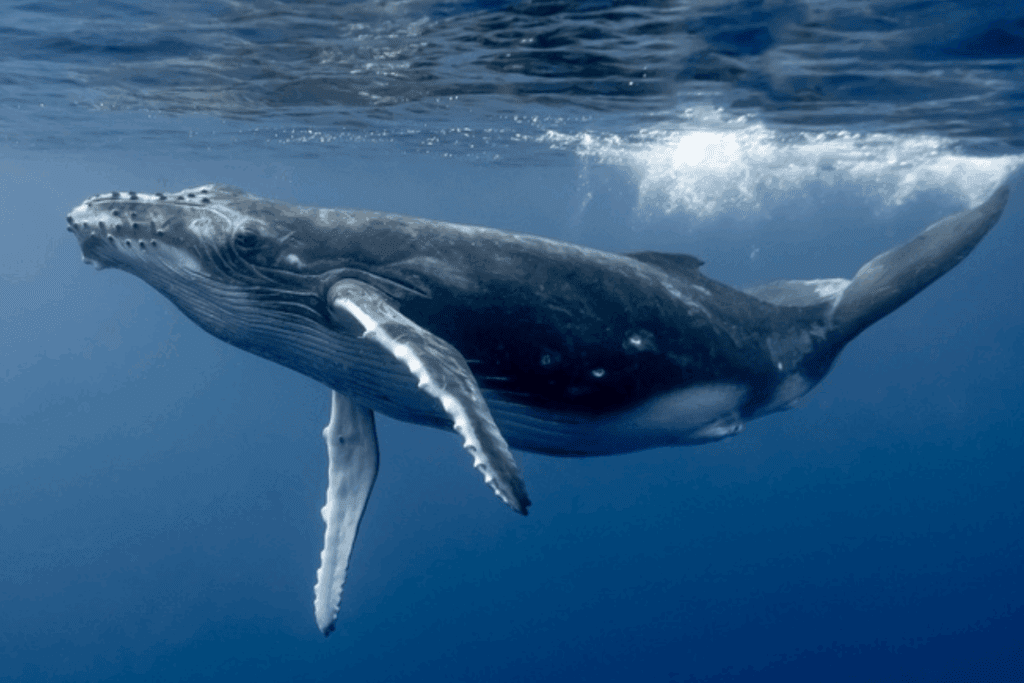
Krill are a key component of the ocean eco-system. Many seabirds, whales and fish rely on krill. Wild salmon eat krill - it is what gives their flesh a healthy, pink hue. Krill are also the primary food source for the world's largest animal, the blue whale.

Unfortunately, some governments, including ours, were considering harvesting krill for commercial purposes like supplying fish food for salmon farms. Harvesting krill on such a large scale would take away the food source of wild fish, seabirds and whales, and would be catastrophic for the marine food web.


Continue reading...

Whales Can't Vote--But We Can

Posted Fri, Mar 3, 2006 by Andy Sharpless to dolphins, krill, marine mammal protection act, whales

Looking back at February, I have had one thing on my mind - whales. When it comes to these creatures, it has been a time of mixed emotions on the Pacific coast of North America.


Continue reading...

Peter Benchley and Shark Conservation

Posted Thu, Feb 16, 2006 by Andy Sharpless

As we look back on the life of Peter Benchley, let us not only recall his facility with language and storytelling, but also his passion for ocean conservation. Benchley himself worked throughout his life to remind us that sharks are a vital part of our ecosystem and should be treated with respect. Most shark species are long-lived, are late to reach reproductive maturity, have long gestational periods, and often produce few pups.  These characteristics make it difficult for an impaired population to rebound, and make sharks highly vulnerable to human attack.


Continue reading...

Ocean Victories in 2005

Posted Tue, Jan 10, 2006 by Andy Sharpless

All of us at Oceana are optimistic about our prospects in 2006.  Part of this optimism is hardwired into our campaigners' psyches.  But a large part of it is rooted in the fact that we've scored so many victories during 2005.  We've proven to ourselves - and to any reasonable observer - that together with your active support, we can win vital protections for the world's oceans.  

I started to make a list of these victories to share with you.  Here are some of the highlights of 2005:

o    Protecting Corals: In the Pacific, Oceana's approach to deep-sea coral protections successfully closed more than half a million square miles of seafloor to bottom trawling.  The closures are the largest ever in U.S. waters, and will help pave the way for similar protections of critical seafloor habitat elsewhere against clear-cutting by trawlers.


Continue reading...

Report Reveals U.S. Fisheries' Waste

Posted Mon, Dec 12, 2005 by Andy Sharpless

Each year, U.S. commercial fishing operations throw away at sea more than one million metric tons of fish, an amount equivalent to 28% of all commercial landings (fish brought ashore) and more than all of the fish landed on the East and West coasts combined. These unwanted fish are known as bycatch and are dumped overboard, often already dead.  


Continue reading...

You are invited!

Posted Mon, Oct 31, 2005 by Andy Sharpless

Oceana is hosting what promises to be one of the most exciting celebrity events and environmental fundraisers this season - and you are invited.

On November 7, join Oceana at Esquire Downtown at Astor Place in New York City!

Our hosts for the evening will be Ted Danson and Amber Valletta. As a member of our Board of Directors and Oceana's Seafood Campaign spokesperson, respectively, Ted and Amber are passionate about Oceana and marine conservation.

Their comments on Oceana's campaigns will contribute to the evening and should inspire intriguing discussions on ocean issues.

The celebration is shaping up to be engaging in other ways as well. Located at New York's most exclusive new apartment building, Astor Place, the interior has been custom decorated by well known designers. As an attendee, you will get to see this extraordinary apartment, mingle with celebrities, and help us save the oceans at the same time.

Tickets are $250 and availability is limited, so please RSVP as soon as you can. Thanks to the generosity of Esquire, the bulk of your ticket price will go to Oceana and towards helping to save the world's oceans.

To learn more and RSVP for this event, just follow this link:

Yes I want to attend the Esquire Downtown event!

Thanks for your ongoing support of Oceana. I hope to see you at Esquire Downtown!


Continue reading...

Ocean Heroes for Safe Seafood

Posted Mon, Oct 24, 2005 by Andy Sharpless

You will be pleased to learn that in the past few months thousands of people have jumped in to help Oceana alert the public to the risks of mercury-contaminated seafood. Thank you for your terrific help.

Last week, Oceana honored two leaders whose actions have also helped consumers become smarter and healthier seafood purchasers. California's Attorney General Bill Lockyer and the national grocery chain Wild Oats Markets were both honored with the 2005 Ted Danson Ocean Hero Award for their leadership in preventing mercury exposure in California and throughout the nation.

By state law, California supermarkets are already required to post signs warning of the threat of mercury in seafood. For years, the state has required warnings on products that contain chemicals like mercury that are known to cause reproductive harm, cancer and other serious health problems.

Attorney General Lockyer has led the enforcement of this law. Oceana Board of Director's member Ted Danson praised Attorney General Lockyer, saying, "He has taken on all those who have worked to undermine its effectiveness, including supermarket chains, tuna companies and even the U.S. Food and Drug Administration."

At Oceana, we have asked why aren't there signs in grocery stores throughout the rest of the country? We are all equally at risk of ingesting too much mercury in our seafood diets.

Wild Oats asked itself the same question -- and did something about it. It is the first national grocery chain to voluntarily post warning signs in all of its stores throughout the United States. Sonja Tuitele from Wild Oats shared that its signs, "are simply allowing customers to make informed choices for themselves and their families."

The public needs to be better informed about mercury levels in fish. California's law requiring businesses to post warnings when products can pose harm to one's health is a step in the right direction - but we need more. All grocery stores nationwide should post these warnings now. If we are all aware of the risks mercury in seafood can pose to our health, then we can make better choices to protect ourselves and our children.

Oceana's Seafood Contamination Campaign sent letters to the heads of several major grocery chains, including Safeway, Whole Foods, Costco, Wal-Mart, Albertsons, Trader Joe's, and Royal Ahold, owners of Giant and Stop-n-Shop, requesting that they post warning signs in all their stores to help consumers make educated choices when buying seafood.

Two weeks ago, we teamed up with Turtle Island Restoration Network and went a step further. We placed a full page ad in the national edition of the New York Times. View the full image on our site.

Wouldn't it be great if even more people could learn about this?

If you are interested in underwriting the placement of this ad in your local paper, Oceana is willing to manage the project. Send me an email!


Continue reading...

On the Pombo Bill

Posted Thu, Sep 29, 2005 by Andy Sharpless

Like you, we at Oceana simply demand courage and competence from the people who are supposed to enforce the conservation laws on which our future depends.

Our faith in the competence of our political leaders is being tested right now.

Believe it or not, THIS WEEK the House of Representatives is planning to vote on a bill that will eviscerate critical protections of the Endangered Species Act. These radical changes undo measures that have protected wildlife threatened by extinction, such as whales, sea otters, and sea turtles.

Passed in 1973, the Endangered Species Act (ESA) is widely considered the most prominent wildlife protection legislation in the world. It has been CRITICAL to the work we do to protect and restore the oceans, and is a bulwark against utter conservation failure -- the extinction of a species.

The 2005 bill is sponsored by Rep. Richard Pombo (R-CA) and strips fundamental conservation provisions from the Endangered Species Act. On the ocean, its main beneficiaries include big industrial fishing companies that capture threatened wildlife, injuring or killing the animals in their huge nets. Among other things, the bill:

Many marine species, and the habitat they need to thrive, have benefited from the protections of the Endangered Species Act. The green sea turtle, for example, was designated under the ESA as being endangered with the threat of extinction just 27 years ago. Since then, the species has begun to rebound due in part to habitat protections established as part of the requirements for species listed as protected under the ESA. The eastern North Pacific population of gray whales was the first marine mammal "de-listed" from the ESA, this population having recovered to near its estimated original population size.

These and other wildlife protections' success stories are directly due to the design and implementation of the Endangered Species Act. We cannot let Mr. Pombo's bill destroy what you and I have fought for and continue to achieve in protecting and conserving a healthy planet. This bill will push species closer to extinction -- not recovery.

Click here to find out what you can do to stop this.

It is not, I believe, a coincidence, that Rep. Pombo's attack on America's conservation law occurs right now, while the news is filled with hurricane recovery, Supreme Court nominations, and reports from Iraq. Polls show that vast numbers of Americans oppose weakening conservation protections -- with as many as as 86% of Americans supporting a strong Endangered Species Act. Yet Rep. Pombo's terrible bill was voted out of his committee in the House of Representatives last week with virtually no press coverage. As a result, most Americans would have no way of knowing that this astonishing revision of our longstanding conservation law is underway. This is exactly what Rep. Pombo hoped for.

Please let your Representative know that you are opposed to Mr. Pombo's bill. If you want to know more about this bill, or its status on Capitol Hill over the coming days, please don't hesitate to send me an email.


Continue reading...