The Beacon: Andy Sharpless's blog
CEO Note: 30,000 Strong Against Drilling in Belize
Andy Sharpless is the CEO of Oceana.
I have a dramatic update for you on our campaign to stop offshore drilling in Belize.
As I reported to you several weeks ago, the government shockingly rejected 8,000 of the 20,000 signatures we collected against offshore drilling, citing poor penmanship as a primary reason.
The 20,000 signatures we collected should have been more than plenty to trigger a national referendum on offshore drilling, but since the government refused to comply, we held our own referendum last week – a people’s referendum.
And the results were astounding.
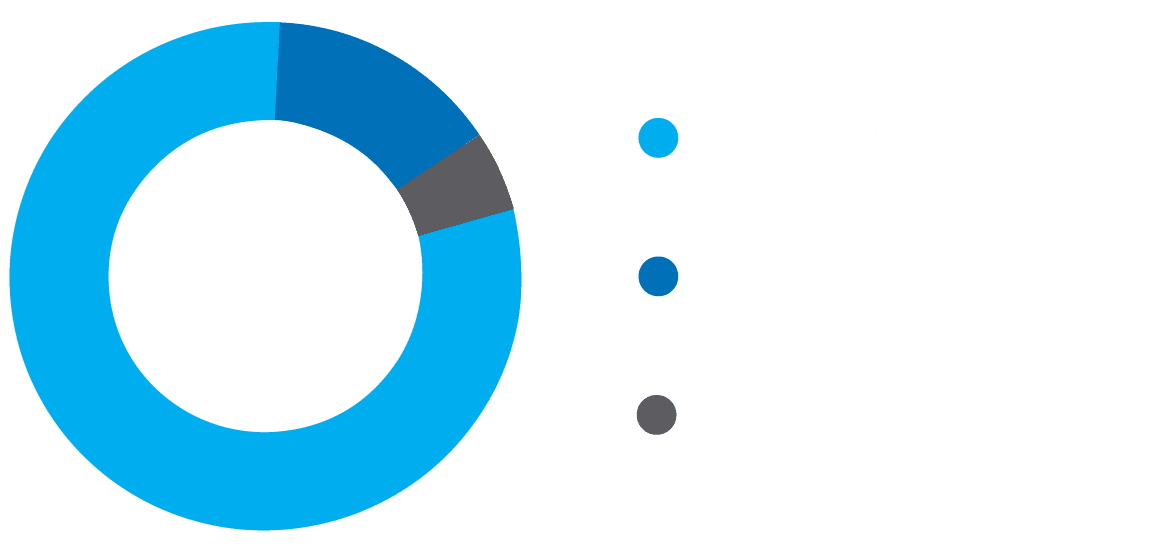
Nearly 30,000 registered Belizeans – that’s almost 20% of the country’s voting population – cast a ballot on the issue of offshore drilling. The results? 96% to 4% voted against offshore drilling. We think this is irrefutable evidence that the Belizean government needs to act responsibly, and either end plans to allow drilling in its reef, or allow a public referendum to determine the national policy.
Oceana is the leading voice in Belize against offshore drilling. Belize is home to the magnificent Belize Barrier Reef, a UNESCO World Heritage Site, which we simply cannot sacrifice for oil.
I’ll keep you posted as this important story continues to unfold.
Continue reading...
CEO Note: The Real Economics of Offshore Drilling
Andy Sharpless is the CEO of Oceana.
If you watched this week’s State of the Union address, you may have heard President Obama announce that he was opening 75 percent of our “potential offshore oil and gas resources.”
The good news is that this isn’t news; it’s simply a reiteration of the administration’s current five-year drilling plan that fully protects the Atlantic and Pacific coasts, as well as much of the U.S. Arctic. The bad news, however, is that plan expands offshore drilling to include much more of the Gulf of Mexico than ever before – and worse yet, some of the Arctic. It’s as if the massive 2010 spill never happened.
In other good news, the President expressed his wish to reduce subsidies for oil companies. The oil companies receive about $10 billion a year in tax breaks, and the Obama administration has proposed cutting $4 billion.
I applaud the President’s commitment to reducing subsidies for the big oil companies, although I wish he would go further and eliminate them completely.
Unfortunately, the State of the Union address, as well as this week’s Republican primary debate in Florida, reiterated that our political leaders still fail to grasp a basic economic fact: that increasing our domestic supply of oil will not lower our prices at the gas pump.
Oil is a global commodity, and prices are set on a world market. Multinational companies who drill for oil – like Shell, B.P. and Exxon – will sell to the highest bidder. That may be the U.S. It may just as well be India or China.
As we learned during the 2010 Gulf of Mexico oil disaster, there’s more at stake. National Journal writer Beth Reinhard asked the right question at Monday’s Republican debate when she noted drilling in Florida will create at most 5,000 jobs, while an oil spill threatens the 1 million jobs that depend upon tourism, which contributes $40 billion each year to Florida’s economy.
That’s a high price to pay to help oil companies continue to make record profits. And yet Rick Santorum, on the receiving end of her question, reiterated his support for more domestic drilling.
Unfortunately, oil companies are powerful players in the election season. They dole out enormous contributions to the candidates, which may explain why we see misinformation on both sides of the political aisle.
Here at Oceana, we’ll stick to the facts. More offshore drilling won’t lower your price at the pump, and we’ll continue to fight to protect our beaches and seafood from dirty and dangerous drilling.
Continue reading...
Another Victory: Protecting Sea Lions in the Pacific
Andy Sharpless is the CEO of Oceana.
I’m pleased to report two victories this week for some of the oceans’ most threatened creatures.
First, Oceana and its allies won protections for endangered Pacific leatherback sea turtles with the establishment of the first permanent safe haven for leatherbacks in the continental U.S. The area, nearly 42,000 square miles off the U.S. West Coast, protects the places where leatherbacks feed on jellyfish after swimming 6,000 miles across the ocean from Indonesia in one of the world’s greatest migrations.
Second, the U.S. District Court ruled in favor of protections for endangered Steller sea lions. These majestic marine mammals compete with large-scale industrial fisheries for food and continue to struggle for survival in the western Aleutian Islands.
The court decision came after Oceana and our allies pressured the federal government to address the declining Steller sea lions’ population by limiting bottom trawling in important areas. In 2010, the government agreed that existing protections were not adequate and put in place new rules to allow more food for sea lions in the Aleutian Islands.
Naturally, the fishing industry was displeased and sued to invalidate the closure. Oceana, Greenpeace and Earthjustice teamed up with the government to uphold the protections, and we learned yesterday that we won.
Thanks to this decision, Steller sea lions will continue to have a chance to rebound. There is still more work to be done, though, because the court required the government to conduct a new analysis of the impacts of its decision. This process should help us better understand the effects of large-scale commercial fishing on sea lions and other ocean resources.
Thanks you for the support that makes these victories possible.
Continue reading...
Ocean Victories of 2011: Thank You!
Andy Sharpless is the CEO of Oceana.
As we enter the last weeks of 2011, I’d like to thank you again for your support this year. Even as we continue to face global economic insecurity, your support has made it possible for Oceana to win important victories for the oceans.
Here are just a few of the victories you helped us achieve in 2011:
- Passing the Shark Conservation Act, which ended shark finning in the U.S.
- Banning the trade, possession and sale of shark fins in California, Washington and Oregon.
- Protecting Belize’s stunning coral reef system with a total ban on all trawling.
- Saving Chile’s endangered Humboldt penguins and blue whales by preventing the construction of a coal-fired power plant near a marine reserve.
- Ensuring that Chile’s commitment to clean up its farmed salmon industry has succeeded.
This is a special year for Oceana, because it’s also our 10th anniversary year. In 2001, our founders decided that the world needed a conservation organization that could win real policy changes for the oceans on an international scale.
Since then, Oceana has expanded to six countries, garnered more than half a million supporters and protected 1.2 million square miles of ocean, including innumerable sea turtles, sharks, dolphins and the people who depend upon and enjoy the oceans. Our founders are pleased with the results, and we hope you are as well.
We continue to have ambitious goals, not just for 2012, but the next decade. I hope you’ll continue to join us for the ride. Thank you again.
Continue reading...
CEO Note: Let's Be Thankful for Ocean Victories
This week, we celebrate Thanksgiving in the United States. It’s a time to appreciate and reflect upon the good tidings of the past year.
We’ve had a great year at Oceana, with numerous policy achievements accomplished for the oceans around the world. I’d like to take a moment to express my thanks for some of our more recent news.
- The two-year anniversary of our office in Belize was Nov. 15. In that short time, our Belizean colleagues have accomplished several historic ocean victories, from banning trawling in the country’s waters to protecting local fishermen from industrial fishing fleets from other countries.
- We continue to win victories for sharks around the world. This week, Florida approved a new rule that fully protects tiger and hammerhead sharks.
- Outside Magazine named Oceana as one of 30 nonprofits who deserve your dollars in what they call “The Year of Giving Adventurously.”
Lastly, of course, I am thankful for all the individuals, foundations and companies who have continued to support Oceana over the years. You have made it possible for us to secure meaningful, positive changes for the oceans. Thank you.
Continue reading...
CEO Note: A Major Victory Against The Keystone Oil Pipeline
It’s easy for conservationists to feel like David in the fight against the Goliath. And although the smaller contestant won that biblical battle, before he did, David must have had moments of doubt. But we got news this week that shows that smart conservationists can effect real change, even against powerful opponents.
On Thursday, the Obama Administration announced it will delay the infamous $7 billion Keystone XL pipeline project, which would have brought 900,000 barrels of tar sands oil from Canada to the Gulf of Mexico, crossing 1,700 miles of American heartland.
Many conservation organizations have worked to stop this disastrous project, which will now enter a long and thorough review process. I must especially congratulate the Sierra Club, 350.org, Tar Sands Action and the Natural Resources Defense Council, which took a leadership role and planned last weekend’s peaceful protest at the White House. This was a sterling example of grassroots organization nabbing an important victory. We must also thank President Obama for listening and making the right choice.
Oceana got some good news from the federal government this week, too, when the administration announced its latest five-year offshore drilling plan. The U.S. Atlantic and Pacific coasts, as well as the eastern Gulf of Mexico, will continue to be protected from drilling.
But we still have a fight ahead. The five-year plan still leaves the U.S. Arctic and the rest of the Gulf of Mexico open to drilling, barely more than a year after the Deepwater Horizon disaster.
Oceana continues to fight dangerous drilling, as well as the misinformation like the notion that the United States can drill its way to $2 a gallon gas. American oil is sold to us at the world price, which is set through the balancing of global supply and demand. Domestic resources of oil are too small to play a significant role in world pricing.
Your help sustains us in the effort to win sensible, fact-based policies that protect the oceans. Thank you again.
Continue reading...
CEO Note: No More Handouts For Oil Companies
Andy Sharpless is the CEO at Oceana.
What will lower your gas prices at the pump?
If you were to listen to national politicians and the marketing of the oil and gas industry, they would tell you that increased domestic drilling will lower your gas prices – and that tax breaks for oil companies will help get us there.
But this simply isn’t true, and it’s been proven time and time again. Oil is a global commodity hunted and extracted by multinational corporations who will sell the oil to the highest bidder, not simply to the citizens of the country where the oil was found. What’s more, the U.S. is a relatively oil-poor country – estimated to have 2 percent of world oil reserves – so even extracting all its oil resources will affect pump prices only by pennies, and will take a decade to be realized.
The oil industry is currently enjoying $4 billion a year in tax breaks from the U.S. government. Surging profits this year for the industry – up 74 percent to more than $100 billion – show that it could easily pay its fair share of taxes. Even if we weren’t currently having a national conversation about balancing the federal budget, this policy is not sensible.
So it was with pleasure last week that I stood outside the U.S. Capitol along with five U.S. senators, six representatives and the Sierra Club to speak out against tax subsidies for oil companies.
By ending billions in tax breaks for oil companies, the U.S. government will protect American taxpayers as well as our beaches, paving the way for a clean energy future.
We'll continue to fight for this crucial change. Your support makes it possible.
Continue reading...
CEO Note: Another Step For Safer Seafood
Great news! On Friday, Marketwatch reported that another chlorine plant will stop polluting the atmosphere and waterways, and ultimately our seafood, with dangerous mercury.
The chlorine plant, owned by chemical giant PPG and located on the Ohio River in West Virginia, would be the eighth to stop using mercury-polluting technology since Oceana started our campaign. When we began our campaign, nine plants in the U.S. used outdated technology that resulted in mercury pollution; with PPG’s announcement, just one mercury-based plant remains.
Mercury is a neurotoxin that can harm the development of children. It has become so prevalent in seafood that the federal government advises women of childbearing age and children not to eat swordfish, king mackerel, tilefish or shark, and to limit eating albacore tuna, because they contain high levels of mercury.
Oceana has also been active in combating mercury contamination internationally. Recently, Oceana board member and entrepreneur María Eugenia Girón wrote about Spain’s decision to finally issue a formal advisory about mercury in seafood after pressure from Oceana.
We’re dedicated to ensuring we have safe, healthy, abundant seafood around the world. Once again, your support helps make this possible. Thank you!
Continue reading...
CEO Note: Victory! West Coast Shark Fin Ban Complete
I’m thrilled to report that as of this afternoon, the entire U.S. West Coast has now banned the trade of shark fins.
After months of work by Oceana and our allies, California Governor Jerry Brown has signed a bill banning the trade of shark fins, joining the ranks of a growing number of governments rallying to protect the top predators in the oceans. Washington State, Oregon and Hawaii have all passed similar bans.
As Oceana shark spokesperson January Jones and I wrote in the Huffington Post, each year, tens of millions of sharks are killed for their fins, mostly to make shark fin soup, an Asian delicacy. Shark finning is a shocking practice in which a shark's fins are sliced off at sea and the animal is thrown back in the water to bleed to death. Shark finning is illegal in U.S. waters, but that didn’t stop the shark fin trade.
According to government data, approximately 85 percent of dried shark fin imports to the United States came through California last year, making California the hub of the US shark fin market. Thanks to Governor Brown, this will no longer be the case.
Sharks have been on the planet for more than 400 million years, but populations around the world are crashing. They play a vital role in maintaining the health of ocean ecosystems, but due to their slow growth rate and low level of reproduction, sharks are especially vulnerable to fishing pressure.
We couldn’t have scored this monumental victory for sharks without you. Thanks to all of you for helping protect the oceans’ top predators.
Continue reading...
Californians: Tell the Governor to Protect Sharks!
Andy Sharpless is the CEO of Oceana.
Calling all Californians: Right now your Governor, Jerry Brown, is considering legislation that would effectively end the trade of shark fins. As you’re probably aware, trade in shark fins facilitates the practice of shark finning, which is one of the single biggest contributors to the collapse of shark populations around the globe.
The California State Senate passed a bill to end the trade in California, A.B. 376, earlier this month and we expect the governor to sign or veto the bill this week, so your rapid input is critical.
Continue reading...